
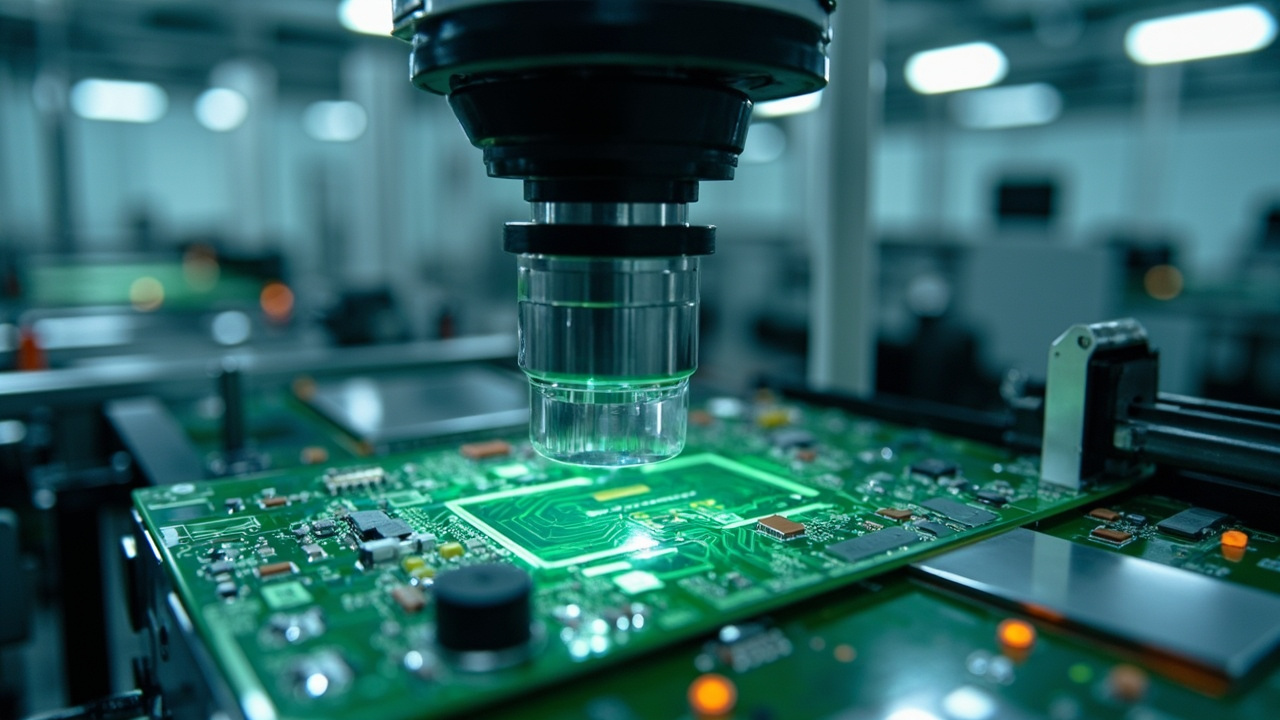
Machine Vision for Quality Inspection in Mexican Electronics Plants
Machine vision systems are crucial for ensuring quality and efficiency in Mexican electronics manufacturing, offering automated inspection, defect detection, and process control. This guide explores their application and benefits.
Machine vision systems are essential for automated quality inspection in Mexican electronics manufacturing, enabling precise defect detection, assembly verification, and process control. These systems significantly improve product quality, reduce waste, and enhance operational efficiency in high-volume production environments.
Key Takeaways
- Machine vision systems automate critical quality inspection tasks in electronics manufacturing, ensuring consistent product standards and reducing manual error.
- Key applications include solder joint inspection, component placement verification, optical character recognition (OCR), and surface defect detection.
- Selecting the right machine vision system involves evaluating camera type, lighting, software capabilities, and integration with existing production lines.
- Implementing machine vision can lead to substantial improvements in yield rates, reduced rework, and faster time-to-market for electronics products.
- Valley International Supply provides technical expertise and product selection support for integrating machine vision solutions into Mexican electronics plants.
The electronics manufacturing sector in Mexico, particularly within maquiladoras along the border, relies heavily on precision and efficiency. Machine vision technology offers a robust solution to meet stringent quality demands, automating tasks that are often repetitive, prone to human error, or too fast for manual inspection. This guide explores the application of machine vision for quality inspection in these critical manufacturing environments.
What is Machine Vision and How Does it Benefit Electronics Manufacturing?
Machine vision involves the use of cameras, lighting, and software to capture and analyze images for automated inspection and process control. In electronics manufacturing, it provides non-contact, high-speed, and consistent inspection capabilities that surpass human visual inspection. This technology is crucial for maintaining the high quality standards required for electronic components and assemblies.
Benefits for electronics plants include improved product quality through early defect detection, reduced manufacturing costs by minimizing scrap and rework, and increased throughput due to faster inspection cycles. Machine vision systems also provide objective, quantifiable data for process optimization and traceability, which is vital for regulatory compliance and continuous improvement initiatives [Source: ISA].
Common Machine Vision Applications in Mexican Electronics Plants
Machine vision systems address a wide range of quality inspection challenges specific to electronics manufacturing. These applications are critical for ensuring the reliability and performance of electronic devices produced in high-volume facilities.
Solder Joint Inspection
Automated optical inspection (AOI) systems use machine vision to examine solder joints for defects such as insufficient solder, excess solder, bridges, and voids. This is a critical step in surface-mount technology (SMT) assembly, where even microscopic flaws can lead to product failure. High-resolution cameras and specialized lighting are employed to capture detailed images, which are then analyzed by algorithms to identify deviations from acceptable standards.
Component Placement Verification
Ensuring that electronic components are correctly placed, oriented, and present on a printed circuit board (PCB) is paramount. Machine vision systems can verify the presence, absence, type, and polarity of components, preventing misassemblies that could render a board non-functional. This is particularly important for small, densely packed components where manual inspection is impractical.
Optical Character Recognition (OCR) and Verification (OCV)
OCR and OCV systems read and verify alphanumeric characters, such as serial numbers, lot codes, and expiration dates, printed on components or PCBs. This ensures traceability and compliance with industry standards. For example, verifying part numbers on integrated circuits prevents incorrect components from being used in an assembly.
Surface Defect Detection
Machine vision can identify various surface defects on PCBs, component packages, or finished products, including scratches, dents, contamination, and discoloration. These systems use advanced image processing techniques to detect subtle imperfections that might not be visible to the human eye, ensuring cosmetic and functional quality.
Dimensional Measurement and Gauging
Precise dimensional accuracy is often required for electronic components and enclosures. Machine vision systems can perform accurate non-contact measurements of dimensions, hole sizes, and feature positions, ensuring that parts meet design specifications. This is particularly useful for small, intricate parts where contact measurement could cause damage or be too slow.
Key Components of a Machine Vision System for Electronics Inspection
A robust machine vision system comprises several integrated components, each playing a vital role in data acquisition and analysis. Understanding these components is crucial for selecting and implementing an effective solution.
- Cameras: Industrial cameras are the “eyes” of the system. Options include:
- Area Scan Cameras: Capture a 2D image of a stationary object or a moving object with a strobe light. Suitable for inspecting entire PCBs or component arrays.
- Line Scan Cameras: Capture a single line of pixels at a time, building a 2D image as the object moves past. Ideal for continuous web inspection or very high-resolution imaging of long objects.
- 3D Cameras: Provide depth information, essential for inspecting solder joint profiles, component height, or surface topography.
- Lenses: Determine the field of view, working distance, and resolution. Telecentric lenses are often preferred in precision applications for their ability to eliminate perspective error, ensuring accurate measurements regardless of object distance within the depth of field.
- Lighting: Proper illumination is critical for image contrast and defect visibility. Common types include:
- Diffuse Dome Lights: Provide even, shadow-free illumination for highly reflective or curved surfaces.
- Backlights: Create high contrast silhouettes for detecting edges, holes, or foreign objects.
- Ring Lights: Offer bright, direct illumination for general inspection tasks.
- Structured Light: Used with 3D cameras to project patterns onto objects, allowing for depth calculation.
- Image Acquisition Hardware (Frame Grabbers): Interface between the camera and the computer, digitizing analog signals or transferring digital data.
- Software: The “brain” of the system, performing image processing, analysis, and decision-making. This includes algorithms for pattern matching, measurement, defect detection, and optical character recognition. Many software packages offer graphical user interfaces for easier programming and deployment.
- Processor/Computer: Executes the vision software and manages data. Industrial PCs are often used for their robustness and ability to handle high-speed data processing.
Valley International Supply offers a range of vision systems for industrial automation, including barcode and vision systems, which can be tailored to specific electronics inspection needs [/insights/product/vision-systems-for-industrial-automation-valley-international-supply].
How to Select the Right Machine Vision System for Your Electronics Plant
Choosing an appropriate machine vision system requires a systematic approach, considering the specific inspection requirements, environmental conditions, and integration challenges. A thorough evaluation ensures the system delivers the desired quality and efficiency improvements.
Define Inspection Requirements
Start by clearly defining what needs to be inspected. What types of defects are you looking for? What are the critical dimensions or features? What is the required accuracy and repeatability? For example, inspecting for a 50-micron solder bridge requires different camera resolution and lens magnification than verifying the presence of a large component. Documenting these requirements will guide the selection of components.
Consider Environmental Factors
The operating environment of an electronics plant can impact system performance. Factors such as ambient lighting, temperature, dust, and vibration must be considered. Industrial-grade cameras and enclosures may be necessary to ensure reliability and longevity in harsh conditions. For example, a cleanroom environment might require specific camera ratings to prevent contamination.
Evaluate Camera and Lens Options
Based on resolution, field of view, and speed requirements, select the appropriate camera type (area scan, line scan, 3D) and resolution (e.g., 5-megapixel, 12-megapixel). The lens choice is equally critical, determining magnification, working distance, and optical distortion. For precise measurements, a telecentric lens might be essential to minimize perspective errors.
Choose Appropriate Lighting
Lighting is often the most critical component for successful image acquisition. Experiment with different lighting techniques (e.g., diffuse, direct, backlight, structured light) to achieve optimal contrast for the features or defects you need to detect. For example, a diffuse dome light might be best for inspecting shiny solder joints, while a backlight is ideal for verifying hole presence.
Assess Software Capabilities
The vision software must be capable of performing the necessary image analysis tasks. Look for features like robust pattern matching, accurate measurement tools, defect classification algorithms, and user-friendly programming interfaces. Integration with existing factory automation systems (PLCs, MES) is also a key consideration.
Plan for Integration and Data Management
Consider how the machine vision system will integrate into your existing production line. This includes mechanical mounting, electrical connections, and communication protocols. Data management is also important; how will inspection results be stored, analyzed, and used for process feedback or traceability? Valley International Supply can provide tailored engineering recommendations for seamless integration.
For further guidance on selecting systems for quality inspection, refer to resources like “Machine Vision and Sensing Solutions for Quality and Inspection in Manufacturing” [/insights/blog/machine-vision-and-sensing-solutions-for-quality-and-inspection-in-manufacturing].
Investment and Return on Investment (ROI) for Machine Vision Systems
Implementing machine vision systems represents a significant investment, but the potential for substantial return on investment (ROI) makes it a compelling option for electronics manufacturers. Understanding the cost factors and benefits helps in justifying the expenditure.
Cost Components
The total cost of a machine vision system includes hardware (cameras, lenses, lighting, frame grabbers, industrial PC), software licenses, integration services, and training. Complex systems requiring high resolution, 3D imaging, or custom software development will naturally incur higher costs. Initial setup and calibration also contribute to the overall investment.
Quantifiable Benefits
- Reduced Defects and Rework: By catching defects early in the production process, machine vision minimizes the number of faulty products reaching later stages or customers. This directly reduces scrap material costs and the labor associated with rework.
- Increased Throughput: Automated inspection is significantly faster than manual inspection, allowing production lines to operate at higher speeds without compromising quality. This leads to increased output and efficiency.
- Improved Product Quality and Consistency: Machine vision provides objective and repeatable inspection, eliminating human variability and ensuring every product meets the same high standard. This enhances brand reputation and customer satisfaction.
- Enhanced Traceability: Systems can log inspection data, including images and results, for every product. This data is invaluable for root cause analysis, process improvement, and compliance with industry regulations [Source: NEMA].
- Labor Reallocation: While machine vision automates inspection, it allows human operators to focus on more complex tasks, such as process optimization, maintenance, or problem-solving, rather than repetitive visual checks.
Calculating ROI
ROI can be calculated by comparing the total investment cost with the quantifiable savings and benefits over a specific period. Factors to consider include:
- Reduction in scrap and rework costs.
- Savings from reduced warranty claims and customer returns.
- Increased production volume and revenue.
- Labor cost savings (from reallocating personnel).
- Improved data for process optimization.
Many systems achieve ROI within 12-24 months, especially in high-volume electronics manufacturing where even small percentage improvements in yield can translate to significant financial gains. Valley International Supply’s technical experts can assist in evaluating potential ROI for specific applications.
Integration Challenges and Solutions for Machine Vision in Electronics Plants
Integrating machine vision systems into existing electronics manufacturing lines can present several challenges, from mechanical fit to data communication. Addressing these proactively is key to a successful deployment.
Mechanical Integration
Challenge: Finding space for cameras, lighting, and mounting hardware on crowded production lines, especially in compact electronics assembly environments. Ensuring stability and precise positioning of components is critical for consistent image acquisition. Solution: Utilize compact vision components, custom-designed mounting brackets, and robotic integration for flexible positioning. Conduct thorough site surveys and 3D modeling to plan the physical layout before installation.
Electrical and Communication Integration
Challenge: Connecting vision system components to power, network infrastructure, and existing PLCs or factory control systems. Ensuring reliable data transfer and synchronization with production line events. Solution: Use industrial-grade cabling and connectors. Implement standard communication protocols like Ethernet/IP, Profinet, or Modbus TCP for seamless data exchange with PLCs and HMIs. Valley International Supply represents brands like Siemens, Norgren, and Eaton, which offer robust automation components for such integration.
Software and Data Integration
Challenge: Integrating vision software with manufacturing execution systems (MES), enterprise resource planning (ERP), or quality management systems (QMS) for data logging, analysis, and process feedback. Solution: Choose vision software with open APIs or standard data export formats (e.g., CSV, SQL). Develop middleware or custom scripts to facilitate data exchange between systems. Ensure data security and integrity, especially for traceability records.
Calibration and Maintenance
Challenge: Initial calibration of the vision system to achieve desired accuracy and maintaining that calibration over time. Regular cleaning of lenses and lights, and troubleshooting potential issues. Solution: Implement a structured calibration procedure using known good parts or calibration targets. Schedule routine preventative maintenance, including cleaning and re-calibration checks. Provide comprehensive training for plant personnel on system operation and basic troubleshooting.
For insights into choosing the right system for packaging line quality inspection, which shares many integration principles, see [/insights/blog/choosing-the-right-machine-vision-system-for-packaging-line-quality-inspection].
Future Trends in Machine Vision for Electronics Manufacturing
The field of machine vision is continuously evolving, with new technologies and methodologies promising even greater capabilities for quality inspection in electronics plants. Staying abreast of these trends can help manufacturers plan for future upgrades and maintain a competitive edge.
Artificial Intelligence and Deep Learning
The integration of AI and deep learning algorithms is revolutionizing machine vision. These technologies enable systems to learn from vast datasets of images, identifying complex and subtle defects that are difficult to program using traditional rule-based vision. Deep learning is particularly effective for inspecting highly variable surfaces or for classifying nuanced defect types, reducing false positives and improving accuracy. This allows for more robust inspection of components with intricate patterns or variable textures.
Hyperspectral and Multispectral Imaging
Beyond standard RGB imaging, hyperspectral and multispectral cameras capture data across a wider range of the electromagnetic spectrum. This allows for the detection of material properties, chemical composition, or subtle anomalies not visible to the human eye or standard cameras. In electronics, this could be used for verifying material authenticity, detecting contamination, or identifying stress points in components.
Collaborative Robots (Cobots) and Flexible Automation
The combination of machine vision with collaborative robots offers highly flexible and adaptable inspection solutions. Cobots can precisely position cameras for inspection tasks, handle components for multiple-angle views, or even perform light assembly and sorting based on vision system feedback. This is particularly beneficial for high-mix, low-volume production or for reconfigurable lines in electronics manufacturing.
Miniaturization and Embedded Vision
As components become smaller, vision systems are also becoming more compact and integrated directly into manufacturing equipment. Embedded vision systems offer faster processing, reduced latency, and a smaller footprint, making them ideal for integration into compact assembly machines or for distributed inspection points throughout a production line.
These advancements promise to further enhance the precision, speed, and versatility of quality inspection in Mexican electronics plants, contributing to higher product reliability and manufacturing efficiency.
Frequently Asked Questions
What types of defects can machine vision detect in electronics?
Machine vision systems can detect a wide array of defects in electronics, including solder joint flaws (bridges, voids, insufficient solder), incorrect component placement or orientation, missing components, surface scratches, contamination, and incorrect alphanumeric markings. They ensure high precision and consistency in defect identification.
How does machine vision improve traceability in electronics manufacturing?
Machine vision improves traceability by accurately reading and verifying serial numbers, lot codes, and other identifiers on components and finished products. This data is then logged and linked to inspection results, providing a comprehensive record for each item, which is crucial for quality control, recall management, and regulatory compliance.
Is machine vision suitable for high-speed electronics production lines?
Yes, machine vision is highly suitable for high-speed electronics production lines. Industrial cameras and processors can capture and analyze images at speeds far exceeding human capabilities, enabling real-time inspection without slowing down the manufacturing process. This ensures consistent quality even at very high throughput rates.
What is the typical lifespan of a machine vision system in an industrial environment?
The typical lifespan of a machine vision system in an industrial environment can range from 5 to 10 years or more, depending on the quality of components, environmental conditions, and maintenance practices. Robust industrial-grade cameras, lenses, and lighting are designed for continuous operation and can be maintained through regular cleaning and calibration.
Can machine vision systems be integrated with existing factory automation?
Yes, machine vision systems are designed for integration with existing factory automation infrastructure, including Programmable Logic Controllers (PLCs), Manufacturing Execution Systems (MES), and robotic systems. They use standard communication protocols to exchange data and control signals, allowing for seamless incorporation into automated production lines.
Contact Valley International Supply for Machine Vision Solutions
For expert guidance on implementing machine vision for quality inspection in your Mexican electronics plant, contact Valley International Supply. Our team of technical experts and project leaders can provide tailored engineering recommendations, product selection, and after-sales support to optimize your manufacturing operations.
Manufacturers & sources referenced
This article references products from the following manufacturers. Learn more on their official sites:
About Valley International Supply
Valley International Supply is a distributor and OEM manufacturer representative of industrial automation equipment, serving manufacturers across the United States and Mexico for over 30 years. We supply PLCs, drives, HMIs, sensors, pneumatics, safety systems and connectivity components, backed by engineering selection assistance and technical support. Contact us at inquiry@valleyintlsupply.com or +1 (956) 338-0631.