
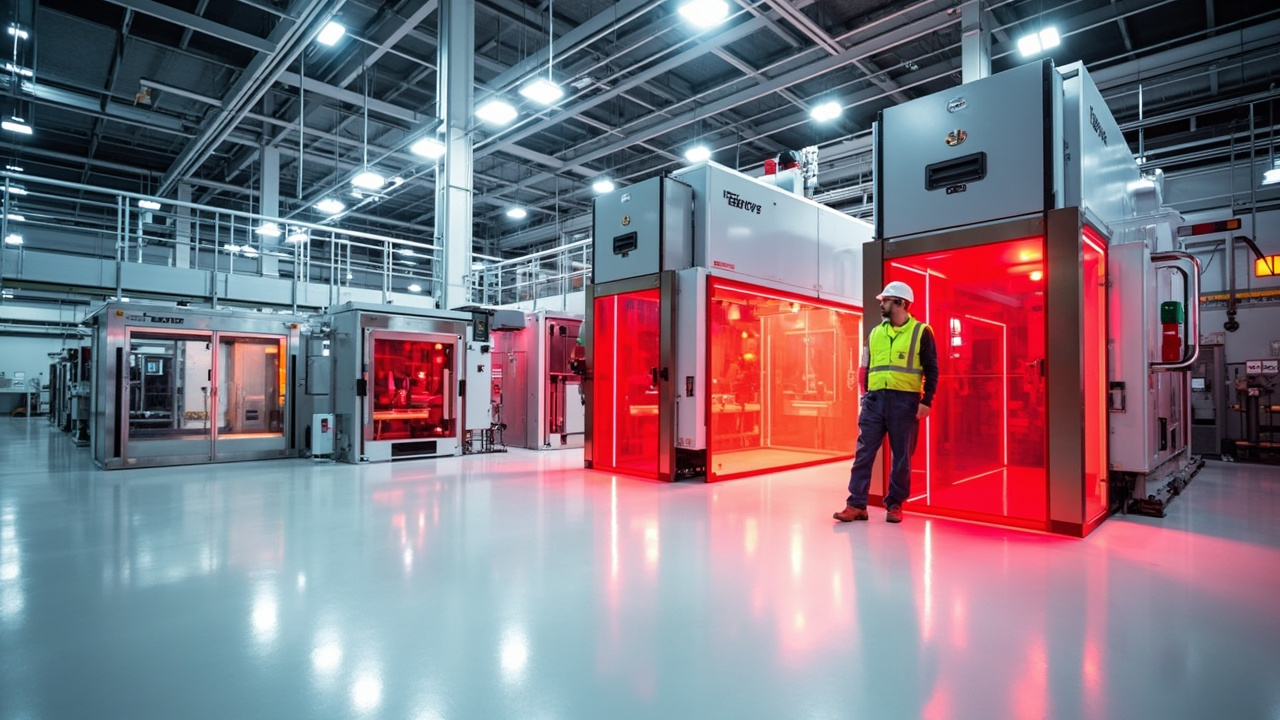
Safety Sensors and Light Curtains for Mexico Factories: A Buyer's Guide
Safety sensors and light curtains are critical components for protecting personnel and machinery in Mexico's manufacturing facilities.
Safety sensors and light curtains are critical components for protecting personnel and machinery in Mexico’s manufacturing facilities. They prevent accidents by detecting human presence in hazardous zones, ensuring compliance with local and international safety standards. Valley International Supply offers a range of these essential industrial automation solutions.
Key Takeaways
- Safety sensors and light curtains are indispensable for preventing industrial accidents and ensuring worker safety in Mexican factories.
- Selecting the right safety solution requires evaluating risk levels, application specifics, and adherence to relevant safety standards like NOM-004-STPS-2000.
- Valley International Supply provides technical expertise and personalized service to help Mexican manufacturers choose and implement appropriate safety systems.
- Understanding the differences between various sensor types, such as photoelectric, ultrasonic, and laser scanners, is crucial for optimal safety system design.
- Proper installation, maintenance, and regular testing are vital for the continuous effectiveness and compliance of safety sensors and light curtains.
The rapid growth of manufacturing in Mexico, particularly in sectors like automotive, aerospace, and electronics, necessitates robust safety protocols. Industrial automation, while boosting productivity, introduces new hazards that demand advanced safety measures. Safety sensors and light curtains are fundamental in mitigating these risks, creating a safer working environment, and ensuring operational continuity.
What are Safety Sensors and Light Curtains, and Why are They Crucial for Mexican Factories?
Safety sensors and light curtains are electro-sensitive protective equipment (ESPEs) designed to detect the presence of personnel within hazardous machine operating zones. They are crucial for Mexican factories because they directly address the need to protect workers from moving machinery, pinch points, and other industrial dangers, thereby reducing accident rates and ensuring compliance with national and international safety regulations. These devices act as an invisible barrier, immediately stopping machinery when an intrusion is detected, preventing injuries or fatalities.
Safety light curtains, for instance, project an array of infrared beams that, when interrupted, send a stop signal to the machine. They are ideal for applications requiring frequent access to hazardous areas, such as loading/unloading stations or assembly lines. Safety sensors, encompassing a broader category, include devices like interlock switches, emergency stop buttons, and pressure-sensitive mats, each serving specific protective functions based on the machine’s operation and risk assessment. The implementation of these systems is a cornerstone of a comprehensive machine safeguarding strategy Occupational Safety and Health Administration (OSHA).
How Do Safety Light Curtains Differ from Other Safety Sensors?
Safety light curtains primarily function as area-guarding devices, creating a protective field that, when breached, halts machine operation. They are distinct from other safety sensors in their method of detection and application. While light curtains use optical beams to detect presence, other safety sensors employ various technologies and serve different purposes. For example, interlock switches ensure guards are closed before a machine operates, and emergency stop buttons provide a manual override for immediate shutdown.
| Feature | Safety Light Curtains | Interlock Switches | Pressure-Sensitive Mats |
|---|---|---|---|
| Detection Method | Infrared light beams | Mechanical or magnetic contact | Weight/pressure on a surface |
| Application | Area guarding, point-of-operation safeguarding | Guard door monitoring, access control | Floor area guarding, presence detection on a surface |
| Typical Response | Immediate machine stop upon beam interruption | Machine stop if guard is open | Machine stop if weight is detected on mat |
| Visibility | Invisible protective field | Visible switch/actuator | Visible mat on the floor |
| Common Use Cases | Robotic cells, presses, assembly lines, packaging | Machine enclosures, access gates | Palletizing areas, hazardous floor zones |
| Required Access | Allows frequent access while maintaining safety | Restricts access until safe conditions are met | Detects presence in a defined floor area |
The choice between these safety devices depends heavily on the specific risk assessment of the machinery and the operational requirements of the factory. Valley International Supply’s technical experts can assist in determining the most suitable safety solutions for diverse industrial applications.
What are the Key Considerations When Selecting Safety Sensors and Light Curtains for a Factory in Mexico?
When selecting safety sensors and light curtains for a factory in Mexico, several critical factors must be evaluated to ensure effective protection and compliance. These include the risk assessment of the machinery, the required safety performance level, environmental conditions, and adherence to relevant Mexican and international safety standards. A thorough understanding of these considerations is essential for making informed decisions that safeguard personnel and optimize operational efficiency.
Risk Assessment and Performance Level
The first step is to conduct a comprehensive risk assessment of the machinery to identify potential hazards and determine the required Safety Performance Level (PL) or Safety Integrity Level (SIL). This assessment, often guided by standards like ISO 12100 International Organization for Standardization (ISO) and ISO 13849-1, helps quantify the risk and specifies the necessary reliability of the safety function. For instance, high-risk applications involving severe injury or death might require PL e or SIL 3, demanding highly reliable safety components and systems. Valley International Supply’s engineering recommendations can guide manufacturers through this crucial initial phase.
Application Environment
The operating environment significantly influences sensor selection. Factors such as dust, moisture, extreme temperatures, vibrations, and electromagnetic interference (EMI) can affect sensor performance and durability. For example, in washdown areas, sensors with high IP (Ingress Protection) ratings are necessary. In environments with high levels of ambient light, light curtains with advanced optical filtering capabilities may be required to prevent false trips.
Access Requirements and Ergonomics
Consider how frequently personnel need to access the hazardous area. Light curtains are ideal for applications requiring frequent access, as they allow for quick and unobstructed entry once the machine is safely stopped. For areas with infrequent access, interlock switches on physical guards might be more appropriate. Ergonomics also plays a role; the safety system should not impede workflow or create new hazards.
Compliance with Standards
Adherence to Mexican safety standards, particularly NOM-004-STPS-2000, which covers machine safety, is paramount. Additionally, international standards such as IEC 61496 (for electro-sensitive protective equipment) and IEC 62061 (for functional safety of safety-related electrical, electronic, and programmable electronic control systems) are often referenced. Ensuring that selected products meet these standards is crucial for legal compliance and worker protection. Valley International Supply’s expertise in industrial automation helps ensure that solutions meet these stringent requirements.
What Mexican Safety Regulations (NOMs) Apply to Industrial Machinery and Safety Equipment?
In Mexico, the primary safety regulation governing industrial machinery and safety equipment is NOM-004-STPS-2000, “Maquinaria y Equipo – Seguridad e Higiene en los Centros de Trabajo” (Machinery and Equipment – Safety and Hygiene in Workplaces). This standard establishes the minimum safety and hygiene conditions for the operation and maintenance of machinery and equipment to prevent risks to workers. It mandates that employers identify and analyze potential hazards, implement safety measures, and provide appropriate training.
Key requirements under NOM-004-STPS-2000 include:
- Risk Assessment: Employers must identify and evaluate the risks associated with machinery.
- Guarding: Hazardous moving parts of machinery must be guarded to prevent contact.
- Safety Devices: The use of safety devices, such as emergency stops, interlocks, and protective barriers (which include light curtains and other safety sensors), is required where necessary.
- Maintenance: Machinery must be maintained in safe operating conditions.
- Training: Workers must receive training on the safe operation and maintenance of machinery.
While NOM-004-STPS-2000 is the overarching standard, other NOMs may also be relevant depending on the specific industry or type of hazard. For instance, NOM-001-STPS-2008 addresses buildings, premises, and facilities, and NOM-033-STPS-2015 covers safety conditions for work in confined spaces. Manufacturers operating in Mexico must ensure their safety systems comply with these national regulations to avoid penalties and ensure worker well-being Secretaría del Trabajo y Previsión Social (STPS). Valley International Supply’s technical expertise can assist in navigating these regulatory landscapes.
How Can Valley International Supply Help Mexican Manufacturers Implement Effective Safety Solutions?
Valley International Supply assists Mexican manufacturers in implementing effective safety solutions by leveraging decades of experience, technical expertise, and a comprehensive portfolio of industrial automation products from leading global manufacturers. Our approach focuses on personalized service, offering tailored engineering recommendations and dependable support throughout the entire process, from initial assessment to ongoing maintenance.
Our team of technical experts and project leaders works closely with clients to:
- Conduct Needs Assessment: Understand specific operational challenges, machinery types, and existing safety gaps.
- Perform Risk Analysis Support: Help identify and evaluate hazards associated with machinery, guiding the selection of appropriate safety performance levels.
- Recommend Optimal Solutions: Propose the most suitable safety sensors, light curtains, and other safeguarding components from our extensive range of products, including those from STEINEL, NOSHOK, DESCO, NORGREN, FASTEST, EATON, and SIEMENS.
- Ensure Compliance: Advise on adherence to Mexican safety regulations (NOMs) and relevant international standards, ensuring that implemented solutions meet all legal and safety requirements.
- Provide Technical Support: Offer expert guidance on installation, configuration, and integration of safety systems into existing automation infrastructure.
- Offer Post-Implementation Support: Deliver ongoing assistance, troubleshooting, and recommendations for system optimization and upgrades to maintain peak safety performance.
By partnering with Valley International Supply, manufacturers gain access to high-quality products and the specialized knowledge required to create a safer, more compliant, and efficient manufacturing environment. Our commitment to customer satisfaction ensures long-term relationships built on trust and reliable support. For more insights into industrial safety, visit our blog on Industrial Safety Sensor & Light Curtain Distributor for Mexico.
What are the Different Types of Safety Sensors Available for Industrial Applications in Mexico?
Industrial safety sensors encompass a diverse range of technologies, each designed to address specific hazards and application requirements within manufacturing environments. Understanding these types is crucial for selecting the most effective solution for a given machine or process. Valley International Supply offers a broad spectrum of these sensors to meet the varied needs of Mexican factories.
Photoelectric Safety Sensors
These sensors use light beams (infrared or visible) to detect the presence or absence of an object. They are commonly used for area guarding, access control, and point-of-operation safeguarding.
- Through-beam sensors: Consist of a separate emitter and receiver. An alarm is triggered when the beam is interrupted. Highly reliable for long distances.
- Retro-reflective sensors: Emitter and receiver are in the same housing, and the beam is reflected off a special reflector. Easier to install than through-beam.
- Diffuse-reflective sensors: Emitter and receiver are in the same housing, and the beam reflects off the target object itself. Suitable for shorter distances and detecting non-reflective objects.
Inductive Safety Sensors
These sensors detect metallic objects without physical contact using an electromagnetic field. They are robust and resistant to dirt, dust, and moisture, making them suitable for harsh industrial environments. Common applications include position monitoring of machine parts, end-of-travel detection, and ensuring guards are closed.
Magnetic Safety Sensors
Often used in conjunction with safety interlock switches, magnetic sensors detect the presence of a magnetic field. They are ideal for monitoring the position of safety gates and guards, ensuring that machinery cannot operate if a guard is open. They offer a high degree of tamper resistance.
Ultrasonic Safety Sensors
These sensors use sound waves to detect objects, regardless of their color, transparency, or surface texture. They are effective in applications where optical sensors might struggle, such as detecting clear materials or in dusty environments. They can also measure distances, making them useful for presence detection in specific zones.
Laser Scanners (Safety Laser Scanners)
Safety laser scanners create a two-dimensional protective field around a hazardous area. They use pulsed laser light to detect objects within this field. Their ability to define complex, configurable protective zones makes them highly versatile for mobile applications (e.g., AGVs) and stationary area guarding, especially where irregular shapes or multiple access points exist. They can also differentiate between warning and protective fields.
Pressure-Sensitive Safety Mats and Edges
These devices detect the presence of a person or object by sensing pressure.
- Safety mats: Placed on the floor around hazardous machinery, they trigger a stop signal when stepped on.
- Safety edges: Flexible strips mounted on moving parts (e.g., machine doors, platforms), they activate a stop when compressed. These are critical for applications where physical contact with a hazardous area needs to be immediately detected.
Valley International Supply provides these and other specialized safety sensors from reputable manufacturers, ensuring that Mexican factories have access to the best technology for their specific safety challenges. Our product range includes solutions from industry leaders like SIEMENS, known for their robust and reliable automation components.
What is the Lifespan and Maintenance Schedule for Industrial Safety Sensors and Light Curtains?
The lifespan of industrial safety sensors and light curtains can vary significantly based on the manufacturer, environmental conditions, application intensity, and maintenance practices. Generally, these devices are designed for long-term operation, often exceeding 10-15 years under optimal conditions. However, their functional safety integrity depends heavily on consistent maintenance and regular testing.
Factors Influencing Lifespan
- Environmental Stress: Exposure to extreme temperatures, humidity, dust, vibration, or corrosive chemicals can shorten lifespan. Sensors with appropriate IP ratings for the environment will last longer.
- Operating Cycles: The frequency of activation and deactivation can impact mechanical components (e.g., in interlock switches) or the light source in optical devices.
- Installation Quality: Proper installation, free from misalignment or physical damage, is crucial for longevity.
- Manufacturer Quality: Products from reputable manufacturers, like those distributed by Valley International Supply, typically offer higher durability and reliability.
Recommended Maintenance Schedule
A proactive maintenance schedule is essential to ensure the continuous and reliable operation of safety sensors and light curtains. This typically involves a combination of routine checks, periodic inspections, and functional testing.
-
Daily/Shiftly Checks (Operator Level):
- Visually inspect for obvious damage, dirt, or obstructions.
- Confirm indicator lights (e.g., power, status) are functioning correctly.
- Perform a simple functional test (e.g., intentionally breaking a light curtain beam) if safe and practical.
-
Weekly/Monthly Inspections (Maintenance Personnel):
- Thorough cleaning of optical surfaces (for light curtains and photoelectric sensors) to prevent false trips or failures.
- Check mounting hardware for tightness and alignment.
- Inspect cables and connectors for wear, damage, or corrosion.
- Verify emergency stop buttons are accessible and functional.
-
Quarterly/Bi-Annual Functional Testing (Qualified Technician):
- Full System Functional Test: Activate each safety device to ensure it stops the machine as intended. This might involve simulating an intrusion or opening a guard.
- Response Time Measurement: For light curtains, verify that the response time is within manufacturer specifications and the calculated safety distance.
- Wiring and Logic Verification: Check safety relay or PLC logic to ensure correct signal processing.
- Documentation Review: Update maintenance logs and review any changes to machine operation or safety system configuration.
-
Annual/Bi-Annual Calibration and Certification (Specialized Service):
- For complex systems, consider professional calibration and certification to ensure continued compliance with performance levels (PL/SIL).
- Review risk assessments and update safety systems as machinery or processes evolve.
Adhering to these maintenance practices not only extends the lifespan of the equipment but also ensures ongoing compliance with safety standards like NOM-004-STPS-2000 and minimizes the risk of accidents. Valley International Supply provides dependable support, including guidance on maintenance best practices for the products they distribute.
Frequently Asked Questions
What is the primary purpose of safety light curtains in a factory?
The primary purpose of safety light curtains is to create an invisible protective barrier around hazardous machinery. When this barrier is interrupted by a person or object, the light curtain immediately sends a stop signal to the machine, preventing access to the danger zone and protecting personnel from injury. They are ideal for applications requiring frequent access.
How do I determine the correct safety performance level (PL/SIL) for my machinery?
Determining the correct safety performance level (PL/SIL) involves conducting a thorough risk assessment of the machinery. This assessment evaluates the severity of potential injury, frequency of exposure, and possibility of avoiding the hazard. Standards like ISO 13849-1 and IEC 62061 provide methodologies for calculating the required PL or SIL based on these risk factors.
Are safety sensors and light curtains required by law in Mexico?
Yes, the use of safety sensors and light curtains, or equivalent safeguarding measures, is mandated by Mexican safety regulations, primarily NOM-004-STPS-2000. This standard requires employers to implement safety measures, including protective devices, to prevent risks to workers from machinery and equipment. Compliance is crucial for legal operation and worker protection.
Can Valley International Supply help with the installation and integration of safety systems?
Valley International Supply provides comprehensive support, including tailored engineering recommendations and technical expertise, to guide manufacturers through the selection and implementation of safety systems. While direct installation services may vary, their team offers invaluable assistance in ensuring proper configuration and integration of safety sensors and light curtains into existing industrial automation setups.
What is the difference between a safety sensor and a standard industrial sensor?
The key difference lies in their function and reliability. A safety sensor is specifically designed and certified to perform a safety-related function, such as stopping a machine to prevent injury. It incorporates redundant components and self-monitoring capabilities to ensure high reliability and fault tolerance. A standard industrial sensor, while detecting conditions, is not designed to the same rigorous safety standards.
Next Steps
To enhance the safety of your manufacturing operations in Mexico and ensure compliance with national regulations, contact Valley International Supply today for a personalized consultation on safety sensors and light curtains.
Manufacturers & sources referenced
This article references products from the following manufacturers. Learn more on their official sites:
About Valley International Supply
Valley International Supply is a distributor and OEM manufacturer representative of industrial automation equipment, serving manufacturers across the United States and Mexico for over 30 years. We supply PLCs, drives, HMIs, sensors, pneumatics, safety systems and connectivity components, backed by engineering selection assistance and technical support. Contact us at inquiry@valleyintlsupply.com or +1 (956) 338-0631.